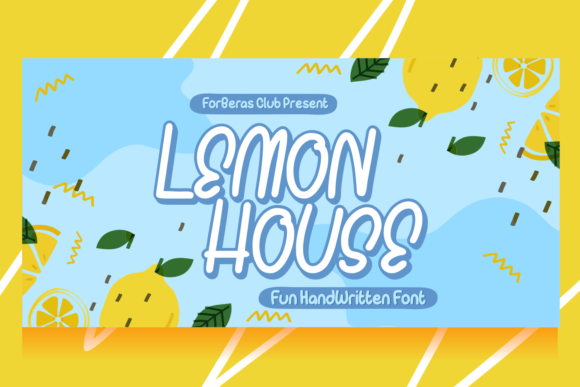
Lemon House: The Handwritten Font for Authentic Brands
As a small business owner, you know that every detail counts. From the sticker on your product packaging to the headline on your Instagram story, these elements build your brand identity. When I started looking for a typeface that could bridge the gap between professional reliability and personal warmth, I discovered Lemon House. This isn't just another digital file; it is a strategic design asset that helps businesses look consistent, recognizable, and trustworthy.
Lemon House is a simple and clean handwritten font that falls squarely into the Script category. Unlike some decorative fonts that sacrifice readability for style, this typeface maintains excellent legibility while offering a fun and friendly touch. For entrepreneurs selling handmade goods, running a local café, or offering coaching services, the mood of your typography speaks volumes before a customer even reads your words. Lemon House whispers approachability. It tells your audience that there is a real human behind the logo, which is often the competitive edge independent creators need against big-box retailers.
Building Trust Through Consistent Visuals
In the early days of my business, I made the mistake of using different fonts for every new flyer or social media post. The result was a brand identity that felt scattered and amateurish. Switching to a dedicated commercial font like Lemon House changed everything. By applying this single typeface across all customer-facing materials, my brand instantly looked more cohesive.
Consistency breeds trust. When a customer sees the same distinct handwriting style on your website banner, your product label, and your thank-you card, they begin to recognize you. This recognition is the foundation of brand loyalty. Lemon House acts as a visual anchor. Whether you are designing a menu for a boutique bakery or creating a digital ad for a new service, this font ensures that your message feels like it comes from the same reliable source.
Real-World Applications for Your Business
The versatility of Lemon House makes it an invaluable tool for various business touchpoints. Because it is adaptable, it works well in both print and digital environments. Here is how you can practically apply this font to elevate your daily operations:
- Product Packaging and Labels: If you sell handmade candles, soaps, or artisanal foods, Lemon House looks incredible on kraft paper labels. Its clean strokes remain readable even at smaller sizes, ensuring ingredients and branding are clear.
- Social Media Graphics: Stop scrolling past generic posts. Use this font for Instagram quotes, Pinterest pins, and story highlights. The handwritten aesthetic performs exceptionally well on social platforms where authenticity drives engagement.
- Logos and Signage: For boutiques and cafés, a logo built with Lemon House feels inviting. It avoids the coldness of corporate sans serif fonts while remaining professional enough for storefront signage.
- Customer Communication: Elevate your standard communications by using this typeface on invoice headers, email signatures, and handwritten-style thank-you notes included in shipments.
- Website Visuals: Use it for call-to-action buttons or section headers on your homepage to guide visitors through your site with a friendly tone.
Strategic Font Pairing for Professional Results
While Lemon House is strong enough to stand alone as a logo, it truly shines when paired correctly with other typefaces. A common mistake among new business owners is pairing two decorative fonts together, which creates visual chaos. To maintain a modern typography standard, you should balance the expressive nature of this script font with a neutral partner.
For a clean, contemporary look, pair Lemon House with a geometric sans serif font. This combination works beautifully for tech startups or minimalist skincare brands where clarity is paramount. The sans serif handles the body text and fine print, while Lemon House adds personality to the headlines. Alternatively, if you run a vintage shop or a traditional bakery, pairing this handwritten font with a classic serif font can evoke a sense of heritage and craftsmanship. The key is to let Lemon House take the lead as the display font or accent, while the supporting typeface handles the heavy lifting of long-form reading.
Readability Across Different Mediums
One of the biggest concerns when choosing a script font is readability. Will customers be able to read this on a mobile screen? Will it hold up on a small product tag? Lemon House was designed with simplicity in mind. The characters are distinct and open, preventing them from blurring together when printed small or viewed on low-resolution screens.
However, practical testing is essential before rolling out a new font across your entire brand identity. Print a sample of your label at actual size. View your website banner on a smartphone. Ask a friend to read your flyer from three feet away. If the text struggles to be read in these scenarios, you may need to increase the font size or reserve Lemon House strictly for short headlines and logos, using a simpler font for detailed information. This pragmatic approach ensures your design assets function as effectively as they look.
Investing in Your Brand Identity
Choosing the right typeface is an investment in your business's future. A premium font like Lemon House offers a level of polish that free system fonts simply cannot match. It helps you stand out in a crowded marketplace by giving your brand a unique voice. Whether you are launching a new product line or rebranding your existing business, the right typography can make your offerings feel more valuable and desirable.
Before you download and start designing, remember to check the commercial font licensing terms. As an entrepreneur, you must ensure you have the correct license for your intended use. If you plan to use Lemon House on physical products for sale, in client work, or within digital templates you intend to sell, verify that the license covers these commercial activities. Protecting your business from legal issues is just as important as the design itself.
Ultimately, tools like Lemon House empower creators to tell their stories visually. It removes the barrier between your creative vision and the final product. By integrating this friendly, clean handwritten font into your workflow, you create a brand experience that feels personal, professional, and distinctly yours. In a world of automated interactions, that human touch is exactly what turns a casual browser into a loyal customer.